· Reference · 3 min read
ISO 27001 Clauses 4–10 Explained: What Each Clause Does
Understand how ISO 27001 clauses 4–10 fit together, what evidence teams commonly prepare and how to avoid disconnected compliance paperwork.
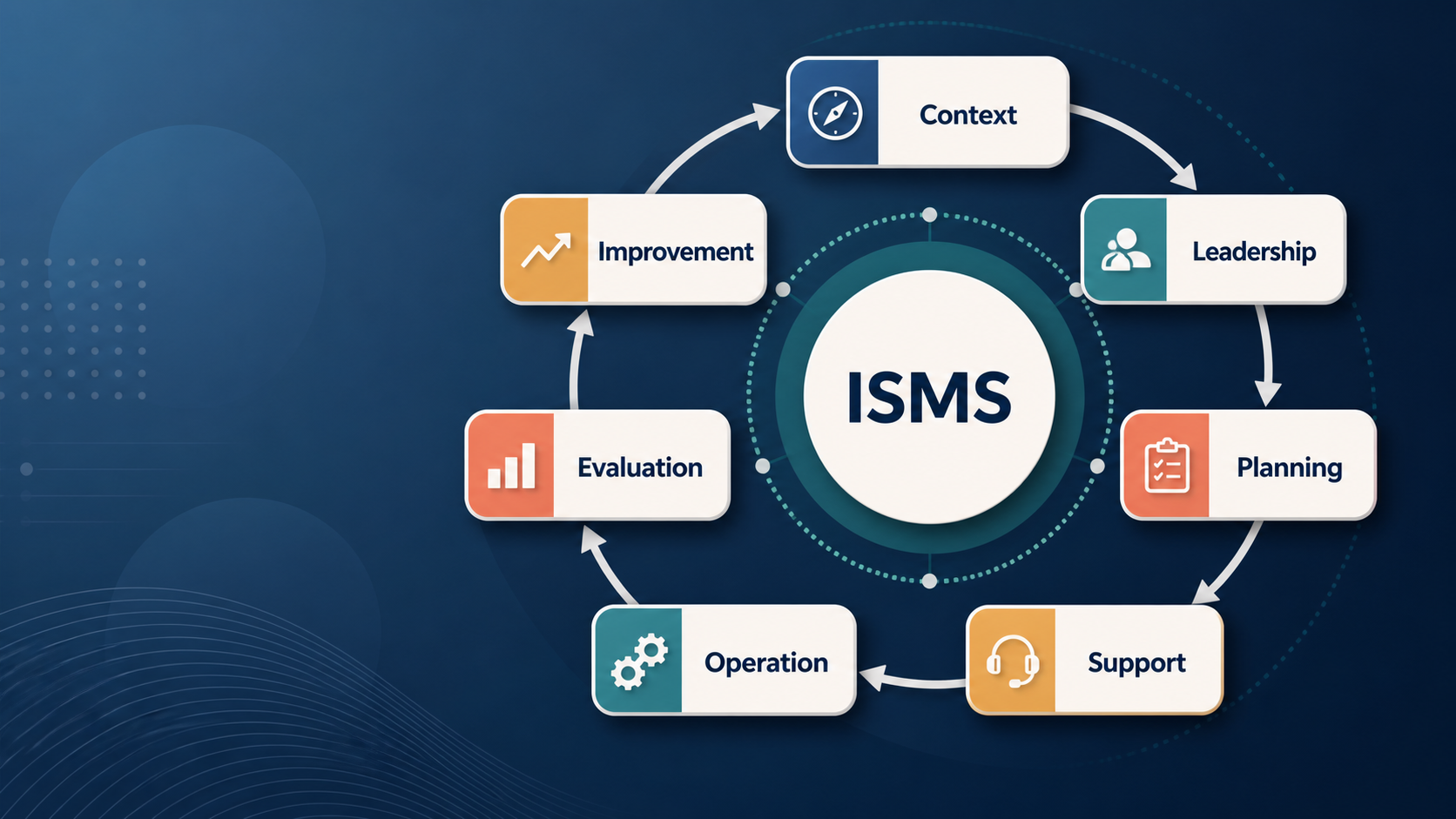
ISO/IEC 27001 is a management-system standard. Its requirements work as a connected cycle, not as isolated documents. ISO’s official overview describes the standard as setting requirements for an information security management system and for establishing, implementing, maintaining and continually improving it. Use the free ISO 27001 Clause Explainer to explore an individual clause, and use this guide to see the larger system.
Clause 4: Context of the organization
This area establishes the environment in which the ISMS operates. Teams consider internal and external issues, relevant interested parties and their requirements, the ISMS scope and the processes needed for the system. Practical outputs may include a context analysis, interested-party register, requirements register, scope statement and process map. The goal is not paperwork; it is to ensure the ISMS fits the organization. Common mistake: writing a generic context page that never influences scope, risk or objectives.
Clause 5: Leadership
Leadership gives the ISMS authority and direction. This includes policy, responsibilities and visible management commitment. Security cannot be delegated entirely to one compliance specialist while leaders remain disconnected from decisions. Useful evidence may include approved policy, assigned roles, governance records, resource decisions and leadership communication. Common mistake: naming an “ISMS owner” but leaving decision rights unclear.
Clause 6: Planning
Planning turns context into risk-based action. This includes addressing risks and opportunities, information security risk assessment and treatment, objectives and planning changes. Typical outputs include a risk method, risk register, treatment plan, Statement of Applicability, objectives and change plans. Common mistake: treating the Statement of Applicability as a copied list rather than a record of justified control decisions. Use the practical guide on building an information security risk register to test likelihood and impact criteria.
Clause 7: Support
Support provides the resources and infrastructure the ISMS needs. Themes include resources, competence, awareness, communication and controlled documented information. Evidence may include training and competence records, communication plans, document controls, approval history and resource decisions. Common mistake: recording attendance but not considering whether people are competent for assigned responsibilities.
Clause 8: Operation
Operation is where planned risk processes and treatments are carried out. Teams should be able to show that assessments are performed when needed, treatments progress and planned processes operate under controlled conditions. Evidence often includes completed assessments, treatment actions, control records, operational reviews and managed change. Common mistake: having well-written procedures with little operating evidence.
Clause 9: Performance evaluation
Performance evaluation asks whether the ISMS is working. This includes monitoring and measurement, internal audit and management review. Organizations need useful evaluation criteria, reliable information and decisions. Evidence may include metrics, analysis, audit program and reports, management review inputs, decisions and actions. Common mistake: collecting security metrics that are easy to count but not useful for management decisions.
Clause 10: Improvement
Improvement deals with nonconformity, corrective action and continual improvement. A strong corrective-action process goes beyond fixing the immediate issue. It considers cause, recurrence, implementation and effectiveness. Evidence may include nonconformity records, root-cause analysis, action logs, effectiveness checks and improvement decisions. Common mistake: closing findings when the task is completed without verifying the outcome.
How the clauses connect
Context shapes scope. Scope shapes risk. Risk drives treatment and controls. Support enables operation. Performance evaluation detects weakness. Improvement changes the system. Leadership oversees the cycle. That connection is the real architecture of ISO 27001. Explore each topic with the free Clause Explainer: ISO 27001 Clause Explainer Check your overall position: ISO 27001 Readiness Checker Source: Official ISO/IEC 27001 overview — ISO overview of ISO/IEC 27001:2022