· Checklist · 2 min read
12 ISO 27001 Readiness Mistakes That Delay Certification
Avoid common ISO 27001 readiness mistakes involving scope, evidence, risk criteria, the Statement of Applicability, internal audit and management review.
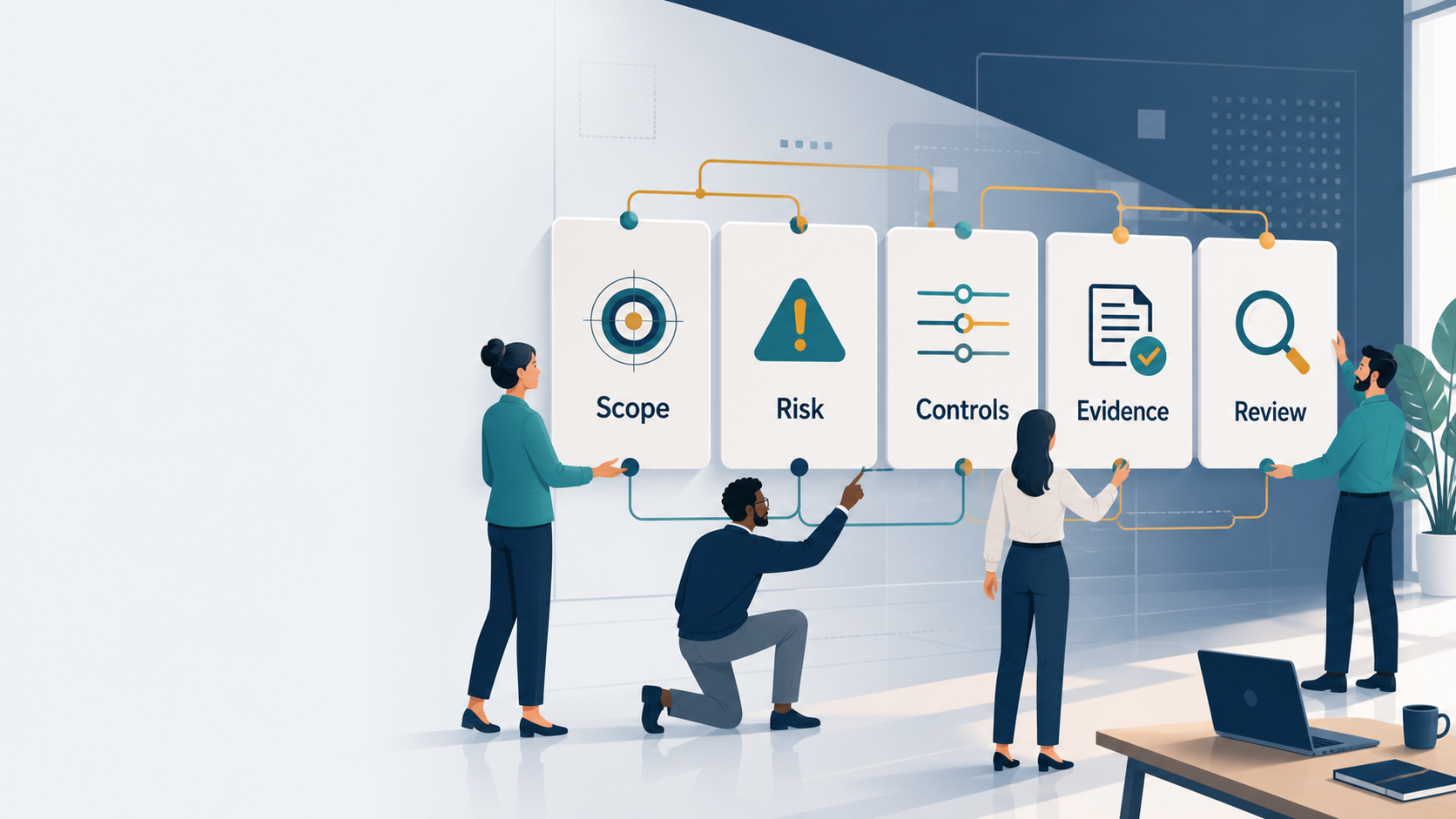
Most ISO 27001 readiness problems are not caused by one missing policy. They come from weak connections between scope, risk, controls, evidence and management review. Before booking an audit, use the free ISO 27001 Readiness Checker, then look for these twelve failure patterns.
1. Treating readiness as a document count
Policies matter, but a management system must operate. Pair every key procedure with recent records that show it was followed.
2. Using a scope statement that is too vague
“Company systems and services” leaves too much open to interpretation. Define the business, services, locations, technology boundaries and important interfaces.
3. Copying a generic risk register
A borrowed list rarely reflects the organization’s actual assets, threats, vulnerabilities, dependencies and business impacts. Start from real scenarios.
4. Leaving likelihood and impact undefined
Words such as low, medium and high need criteria. Otherwise risk scoring becomes personal opinion. Test your scales with the Risk Score Calculator.
5. Selecting controls without a rationale
Control selection should connect to risks, requirements and the organization’s context. Use the Annex A Control Lookup for orientation, then record applicability decisions in the Statement of Applicability.
6. Confusing implementation with effectiveness
A configured setting may show implementation. Review records, alerts, tests and completed actions help show that the control operates.
7. Collecting evidence without a period
An auditor needs to know when an activity happened and what period it covers. Add dates, scope, owner and approval context to evidence records.
8. Waiting too long to run internal audit
A late internal audit leaves no recovery time. Plan it early enough to investigate findings and verify actions.
9. Treating management review as a status meeting
Management review needs meaningful inputs, decisions and actions. Generic minutes without conclusions are weak evidence.
10. Closing findings without checking effectiveness
Completion answers “Was the task done?” Effectiveness asks “Did the action prevent or reduce recurrence?”
11. Ignoring supplier and cloud dependencies
Many critical controls depend on service providers. Identify shared responsibilities and keep current assurance evidence.
12. Booking certification before the system has history
A new process with no completed cycles may be difficult to evaluate. Build enough operating evidence for the audit scope and discuss timing with your certification body.
A better sequence
- Run a baseline readiness assessment.
- Confirm scope and requirements.
- stabilize the risk method.
- map and implement controls.
- collect operating evidence.
- complete internal audit.
- complete management review.
- close and verify corrective actions.
- repeat the readiness assessment.
- agree audit timing with the certification body. Explore individual requirements with the Clause Explainer and investigate controls with the Annex A Control Lookup.